Jean Gray Mohs, Visual Artist
Creatives in Conversation: I believe that we can learn so much from each other and I am fascinated by the ways in which artists of all mediums move through the creative process. Each interview features a different local artist as we discuss the challenges and joys that come from accessing and living with their creativity.
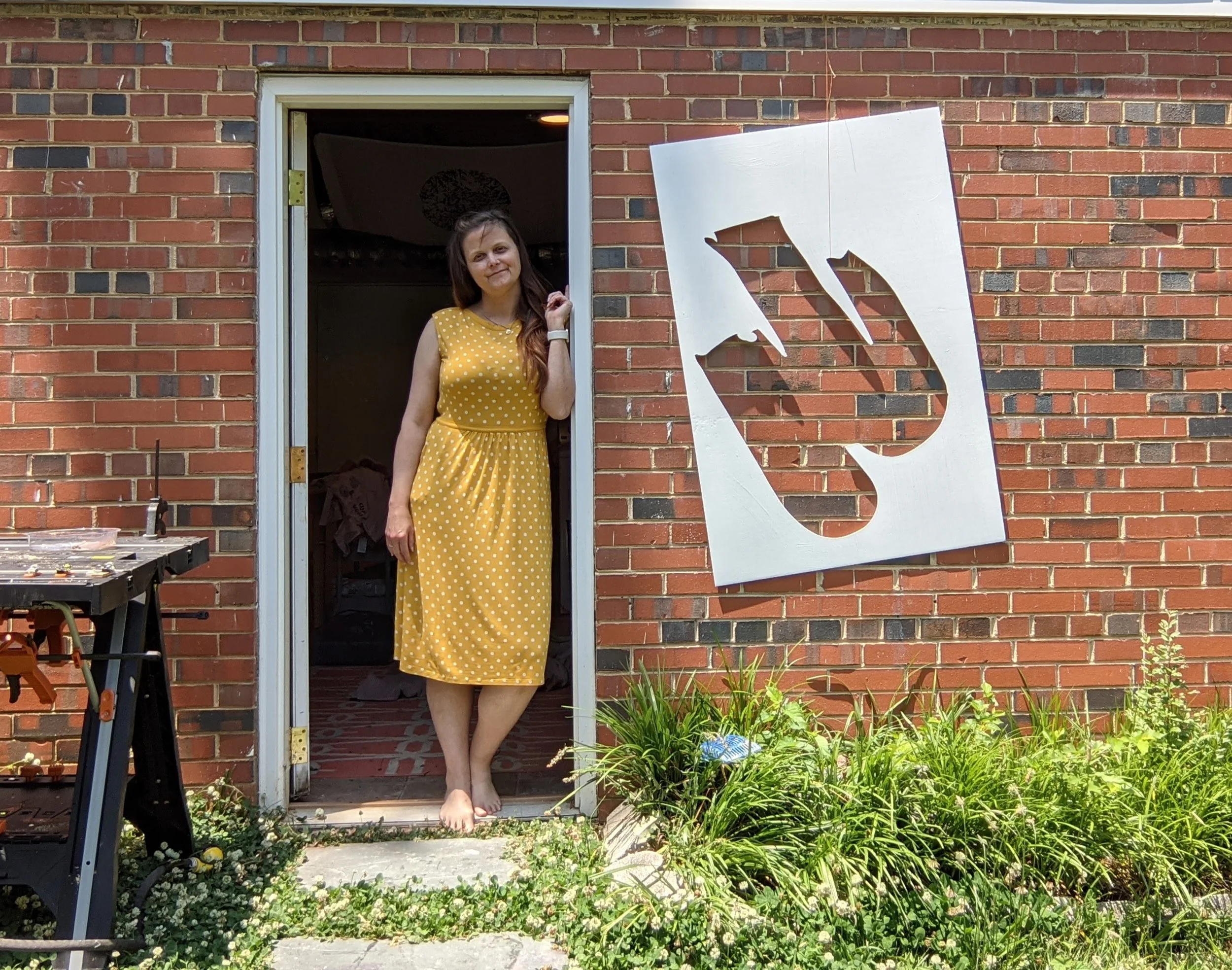
Jean Gray at her home studio. Photo used with permission.
Jean Gray Mohs is an artist born and raised in North Carolina. Her work explores disease, transplant, and the body's tenacity. She lovingly calls Raleigh home and has been creating artwork and educating the area about art since 2008. Selected exhibits include the Contemporary Art Museum in Raleigh, the North Carolina Museum of Art, Greenhill Gallery, and Meredith College. Her work has been featured on Georgia Public Radio, and in the Atlanta Journal-Constitution, Southern Living, and Traditional Home. Her works have been shown regionally as well as internationally.
What does living a creative life mean to you?
For me personally, it really means living a life where you're creating something from nothing. You’re living a life that’s littered with innovative problem solving tasks. And that can be anything! I saw it when I was a teacher, and people who build curriculums. You see it in songwriters; you see it in doctors who have really complicated surgeries. Even when I was an elementary school teacher and I taught art, I would say to the kids, you can't escape art. Someone designed the building we're in; someone designed the shirt you're wearing; someone designed the chair you're sitting in. You may not think you love art, but it's quite literally all around.
Living a creative life doesn’t necessarily mean you have a paintbrush in your hand. The author Charles Bukowski said that bull fighting could be art. Opening a can of sardines can be art, loving can be art. It’s just a life well lived.
What are some creative challenges you've come across during your artistic journey and how have you moved through them or are you still moving through them?
A few challenges have to do with physicality, like with my body. And then time restraints. When I had end of life stage lung disease, obviously my physicality got quite small and my ability to move around was really limited. It’s not like I stopped working, I just changed how I worked. I changed to watercolors, which are portable. They're easy, they're washable. You can leave them around the house inconspicuously.
So the challenge there – it just offered up a new way to work. So, it was [about] finding the joy in that limitation, even though that was a hard task to do. But also finding my place within the boundaries of what I was capable of. You asked what a creative life is … a creative life is challenging yourself every day and being excited to be challenged by how to answer those questions, whatever that question may be.
I love that. I tell my students this all the time, sometimes having boundaries can actually push you further than you would've gone otherwise.
Yes. Because you have a parameter that you're working within. So physicality was a big, dynamic, pretty obvious challenge that I had. But now looking at the work, now you can see the counterbalance of the removal – because now the work is all about the physicality. There's a reason I'm using wood; there’s strength there. There's a reason I'm using the wax thread; it has the appearance of fragility, even though it's quite strong. And then there's a reason why the pieces are precariously laid the way they are because they're leaning just so, a balance just so, walking this fine line that we all walk, especially those in the chronic illness community or the disability community. We all know that [we] can easily fall completely out of balance, and these pieces collapse like the Jacob’s Ladder toy of our youth. They collapse on themselves but they still survive. So that speaks to the durability of our bodies as well.
When I became a mother that became a very obvious time restraint! But really it helped my practice because I had to be incredibly intentional about my time. And I had to literally carve pockets of time and ask for those moments and ask for that time.
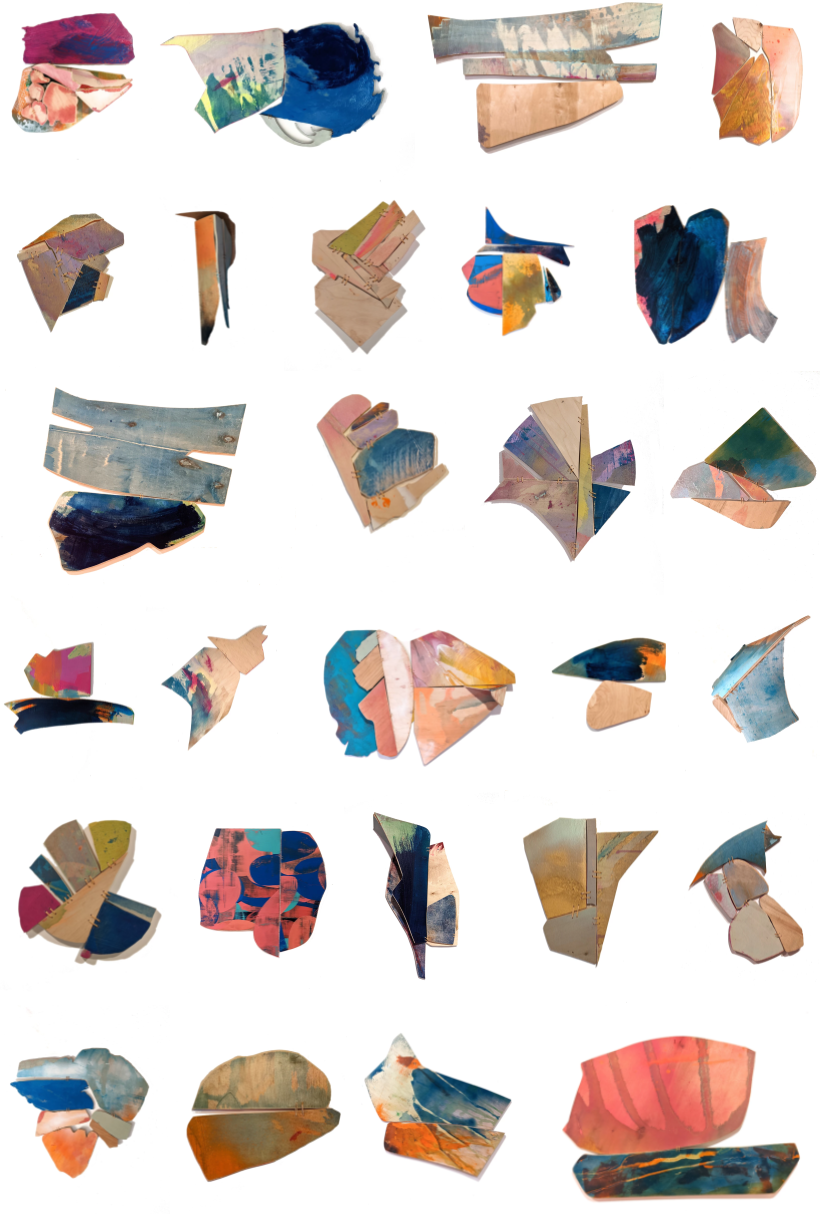
Assorted pieces by Jean Gray Mohs
I think we are trained to think about our bodies as little as possible. If we stopped and thought about our bodies too much, that would get in the way of being productive. So I love that you're really thinking about the body and I'd really never thought about it in the way you express it - the strength alongside the fragility. I don't think that many people are willing to sit with the realities of both of those things, so I'm really glad you're doing it.
Well, it’s been a good way for me to process these bigger things that have happened over these past few years.
What is the role of the artist within their community?
I wanted to borrow from Hans Hofmann with this. He's a German-born abstract expressionist and I really like what he has to say: an artist's responsibility to society, especially during dark times, is to preserve, nurture and glorify the human spirit. I feel like this takes shape in its power in social and political ways; for example, articulating the voice of a generation or being a beacon in that way. But also more intimately, thinking about how I use art as a place to preserve and nurture my own spirit.
I often refer to my work as a vessel because [within my work] you'll see lots of bodies of work, lots of different mediums, lots of different materials. But each of them speaks with the idea at first as me processing something and then the material follows to support what it is I need to process or what I need to say. So, for me, art has become a place to carry and hold moments.
On a smaller scale it’s also your own voice and sharing and modeling certain things for the community. A big reason why I make the work I'm making now is because pre-[lung] transplant, I was starved for people who looked like me, who had needs like me … how they were modeling living a successful life. I was starved for it. And now – I'm not saying I'm doing it right – but it's an example of one way through a transplant, specifically.
What, or who, are some of your creative influences?
Andrea Zetell is incredible. I'm very inspired by her minimalism and her pragmatism. And she has this whole way of making you reconsider the space that you inhabit. I just love her devotion to her craft.
CJ Hendry has this incredible skill and talent, but really I like watching her as a model for my own practices because [of] how bold she is, how creative she is.
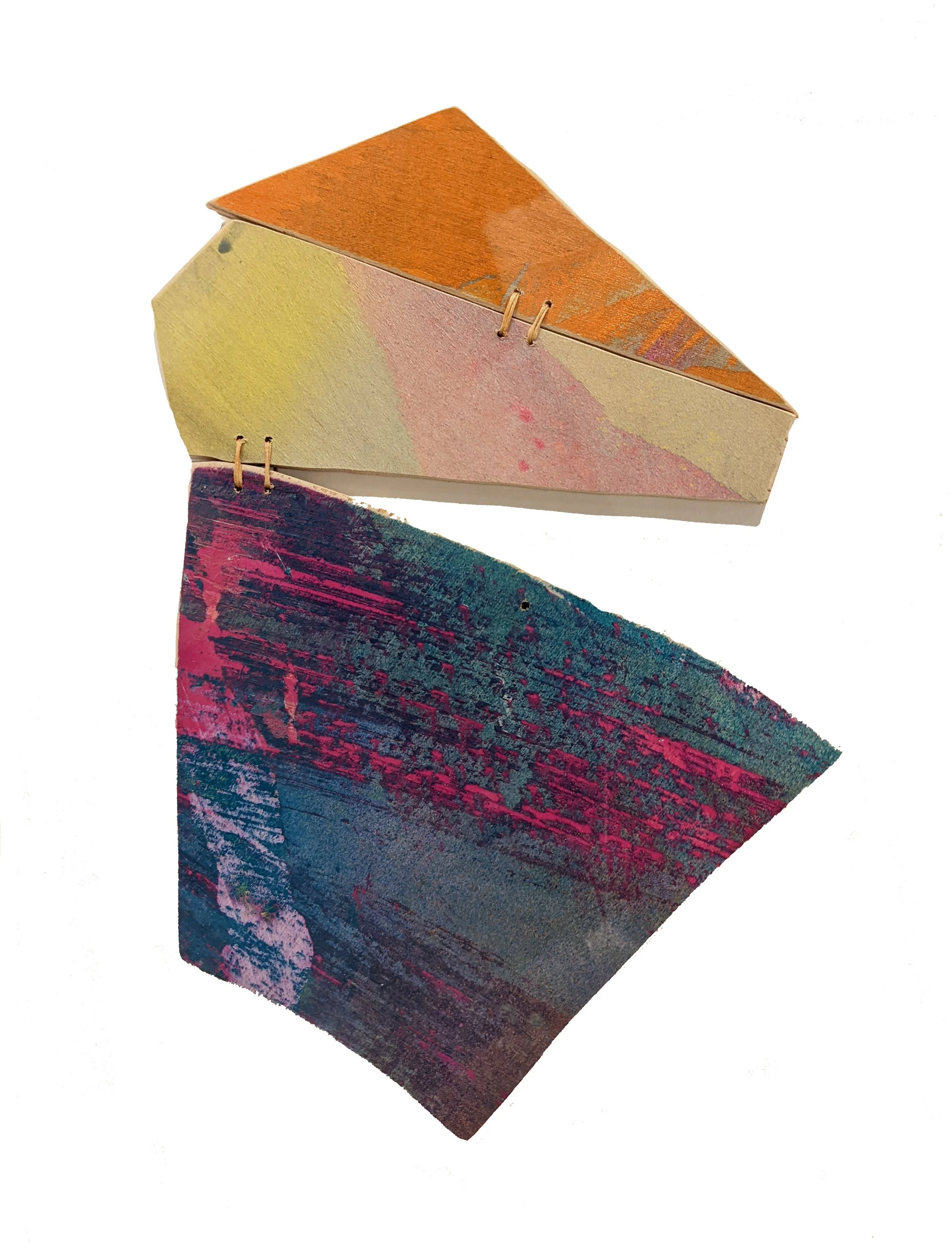
Paris and Harriet, 12 x 15 inches
I've always found touchstones in the artist Gerhard Richter. What I like about him is you can see through the course of his lifetime, his bodies of work have shifted, but you can see and understand his shifts. It's really powerful the way he's transformed himself over time. And of course Norman Rockwell is an all-time favorite, just because of his storytelling and his poignancy with articulating the voice of a time. John Singer Sargent for his ability to harness sense of space, and his use of light in his paintings.
In terms of books, How To Be Sick was really good for me, by Toni Bernhard. No Mud, No Lotus by Thích Nhất Hạnh. Both of those books gave me a lot of language and freedom to lean into my boundaries as a person.
And then of course I'm just terribly inspired by my eight-year-old twins. To see life through their eyes, it makes things new again. I'm dearly thankful for that.
What advice would you give to someone who wants to be more creative?
Let go of any perceived notion of how to be creative. Just start. Start making, start writing, start singing, just start. Don’t ask for permission. Don't wonder what someone else is gonna think about it.
Surround yourself with things that inspire you, surround yourself with people who inspire you and push you and motivate you. Support their work, applaud them. Immerse yourself in the thing that you're craving to do.
There's no one way to be creative. And it is, in fact, your inner voice or your hand or your gesture that becomes the style of the work. It's your story. And it's unlike anyone else's and so in that way, no one can do what you could do.
This interview has been condensed and edited for clarity.